Lean Six Sigma Blackbelt vs Green belt
Are you curious about what sets a Lean Six Sigma Green Belt apart from a Black Belt? Whether you’re thinking about advancing your career or simply want to understand these important roles, knowing the difference can make all the difference.
These belts aren’t just colors—they represent distinct skills, responsibilities, and levels of expertise that can impact how you lead projects and drive results. Keep reading to discover exactly what each belt means for you and how choosing the right one can boost your success in process improvement.

Credit: www.salestrainingint.com
Lean Six Sigma Basics
Lean Six Sigma Green Belts support project teams with data analysis and process improvements. Black Belts lead projects, train others, and solve complex problems. The main difference lies in experience, responsibility, and leadership level within the methodology.
What Is Lean Six Sigma?
Lean Six Sigma is a method to improve business processes. It helps reduce waste and errors. The goal is to make work faster and better. This method combines Lean and Six Sigma techniques.
Lean focuses on removing waste. Six Sigma focuses on reducing defects. Both together create a strong way to improve quality and efficiency.
Why Use Lean Six Sigma?
Companies use Lean Six Sigma to save money and time. It helps deliver better products and services. This method improves customer satisfaction. It also boosts employee teamwork and problem solving.
Lean Six Sigma Roles
Lean Six Sigma has different roles, called belts. Each belt level has specific skills and duties. The Green Belt and Black Belt are common levels. They work on projects to improve processes.
Green Belts assist with data collection and analysis. Black Belts lead projects and train others. Both play important roles in Lean Six Sigma success.

Credit: kaizen.com
Role Of Green Belt
The Green Belt plays an important role in Lean Six Sigma projects. They support process improvements in their teams. Green Belts work on quality and efficiency but do not lead large projects alone. They help collect data and analyze problems. They also assist Black Belts and managers with solutions.
Green Belts balance their regular job with Lean Six Sigma tasks. Their role improves daily work and reduces errors. They bring practical knowledge of the work area to the project.
Key Responsibilities
Green Belts collect and analyze data for projects. They identify problems and suggest improvements. They support the project team with tools and techniques. Green Belts lead small projects within their area. They report progress to Black Belts or project leaders. Training and guiding team members is part of their job. They help maintain project documentation and results.
Typical Projects
Green Belts handle projects that improve local processes. These projects often focus on reducing waste or errors. They work on improving customer service or product quality. Projects may involve speeding up workflows or cutting costs. Their projects usually affect one department or work area. Green Belts solve practical problems with clear goals. They deliver measurable improvements within a few months.
Skill Requirements
Green Belts need basic knowledge of Lean and Six Sigma tools. They must understand data collection and simple analysis methods. Good communication skills help them work with teams. Problem-solving skills are important for finding solutions. Time management helps balance projects and daily tasks. Green Belts should be open to learning and feedback. They need skills to lead small groups effectively.
Role Of Black Belt
The role of a Lean Six Sigma Black Belt is crucial in improving business processes. Black Belts lead projects that reduce waste and increase efficiency. They guide teams and use data to solve complex problems. Their work impacts the entire organization and drives lasting change.
Key Responsibilities
Black Belts lead multiple improvement projects at once. They train and coach Green Belts and team members. They analyze data to find root causes of issues. Black Belts create detailed project plans and track progress. They communicate results to management and stakeholders clearly.
Typical Projects
Projects led by Black Belts often involve large-scale changes. Examples include reducing production defects and cutting process time. They work on cost-saving initiatives and improving customer satisfaction. Black Belts handle projects that need advanced problem-solving skills. Their projects usually affect many departments or the whole company.
Skill Requirements
Black Belts need strong analytical and leadership skills. They must understand statistics and Lean Six Sigma tools deeply. Communication skills help them explain complex ideas simply. Time management is essential to handle multiple projects. Black Belts also need patience and persistence to see projects through.
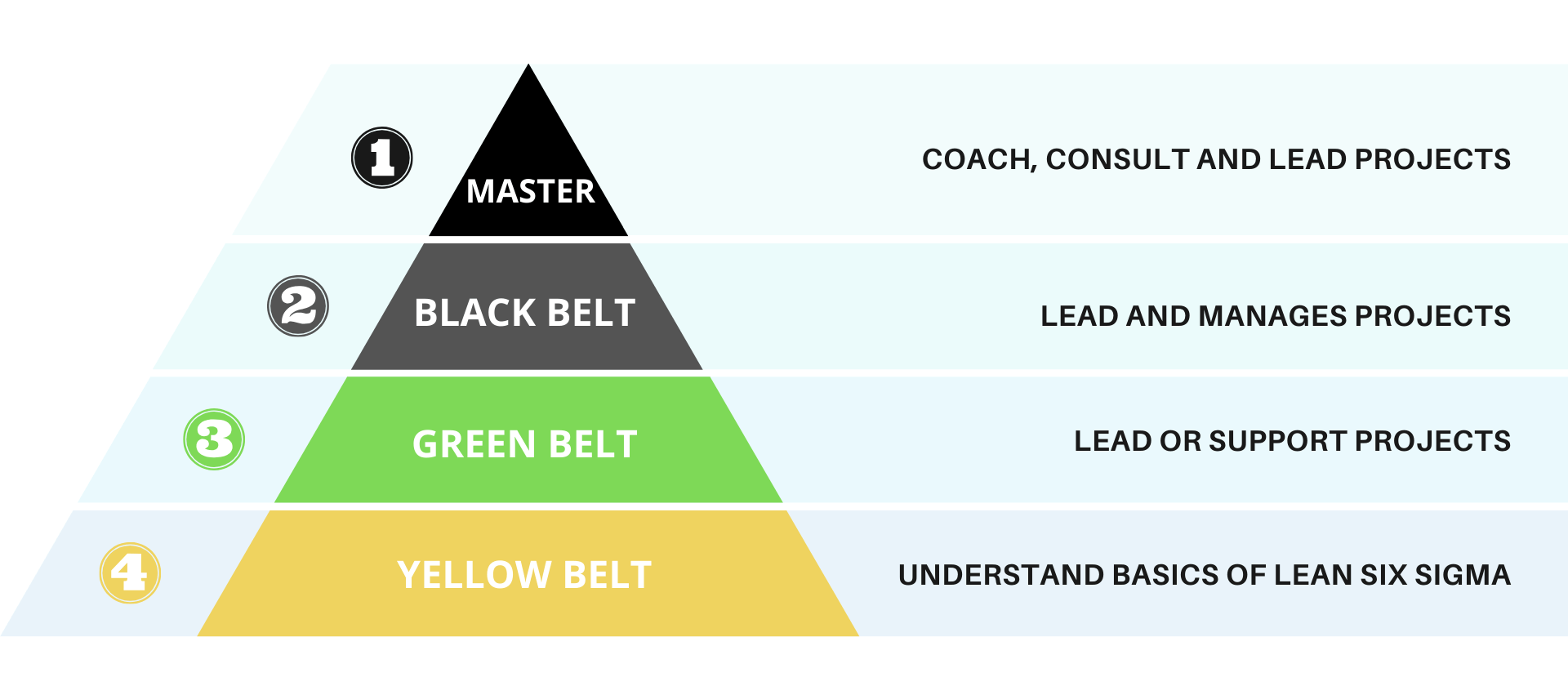
Credit: www.6sigmacertificationonline.com
Training And Certification
Training and certification are key steps in earning Lean Six Sigma belts. These steps show your knowledge and skill levels. Green Belt and Black Belt training differ in depth and focus.
Green Belt training covers basic tools and methods. Black Belt training goes deeper into analysis and project management. Certification proves you passed tests and completed projects.
Green Belt Curriculum
Green Belt courses teach core Lean Six Sigma tools. Topics include process mapping, basic statistics, and problem-solving methods. Trainees learn how to support improvement projects. The focus stays on team roles and data collection.
Black Belt Curriculum
Black Belt courses cover advanced data analysis and leadership skills. Training includes hypothesis testing, design of experiments, and change management. Trainees learn to lead projects and mentor Green Belts. The curriculum emphasizes deep problem solving and decision making.
Certification Process
Certification requires passing an exam and completing a project. Green Belts show skills by supporting projects or improving processes. Black Belts must lead projects that deliver measurable results. Both certifications need proof of knowledge and practical experience.
Impact On Career
Lean Six Sigma Green Belt and Black Belt certifications affect careers differently. Both bring value but open distinct paths. Understanding these differences helps choose the right belt for your goals.
Job Opportunities
Green Belts often work on project teams supporting process improvements. Their roles focus on analyzing data and solving specific problems. Black Belts lead large projects and manage teams. They handle complex challenges and drive change at higher levels. Black Belt holders find more leadership roles in companies.
Salary Expectations
Green Belts earn good salaries, reflecting their skills in problem-solving. Black Belts earn higher salaries due to advanced expertise and leadership. Companies pay more for Black Belts to lead critical projects. Salary growth is faster with a Black Belt certification.
Leadership Roles
Green Belts support project leaders and gain experience in teamwork. Black Belts take charge of entire projects and guide teams. They influence company strategy and mentor others. Leadership skills grow stronger with Black Belt training.
Choosing Between Green And Black Belt
Choosing between Lean Six Sigma Green Belt and Black Belt depends on several factors. Both belts offer valuable skills but serve different roles in process improvement. Understanding these differences helps you make the right choice.
Experience Level
Green Belts usually have some experience with quality tools and project work. They support Black Belts and lead smaller projects. Black Belts have deeper knowledge and handle complex projects. They often guide teams and train others.
Career Goals
Green Belt certification suits those aiming for process improvement roles. It builds a solid foundation for growth. Black Belt fits those who want leadership and strategic roles. It opens doors to higher management positions.
Organizational Needs
Organizations need Green Belts for hands-on project work and quick fixes. Black Belts focus on long-term improvements and bigger challenges. Companies often hire both to balance daily tasks and strategic goals.
Frequently Asked Questions
What Are The Main Roles Of Green Belt And Black Belt?
Green Belts support projects and analyze data, while Black Belts lead projects and train teams. Black Belts focus more on strategy and complex problem-solving. Green Belts assist and implement improvements under Black Belt guidance. Both roles drive Lean Six Sigma success but differ in scope and responsibility.
How Do Green Belt And Black Belt Certifications Differ?
Green Belt certification covers basic Lean Six Sigma tools and techniques. Black Belt certification is advanced, including leadership and project management skills. Black Belts handle larger projects and mentor Green Belts. Certification difficulty and training duration increase from Green to Black Belt levels.
Can Green Belts Become Black Belts Later?
Yes, Green Belts can advance to Black Belts with additional training. They must deepen their knowledge and lead more complex projects. This progression enhances career growth and expertise in Lean Six Sigma methodologies. Many organizations encourage this development path.
What Project Types Do Green Belts And Black Belts Lead?
Green Belts typically manage smaller, less complex projects within their departments. Black Belts handle large, cross-functional projects with significant impact. Black Belts also oversee project teams and ensure alignment with business goals. Project scale and complexity distinguish their responsibilities.
Conclusion
Lean Six Sigma Green Belt and Black Belt roles differ in skills and responsibilities. Green Belts handle smaller projects and support teams. Black Belts lead complex projects and train others. Both help improve business processes and reduce errors. Choosing the right belt depends on your career goals and experience.
Understanding these differences helps you decide which path fits you best. Keep learning and practicing to grow in Lean Six Sigma. Success comes with patience and steady effort.